Hobart
Pychotherapy
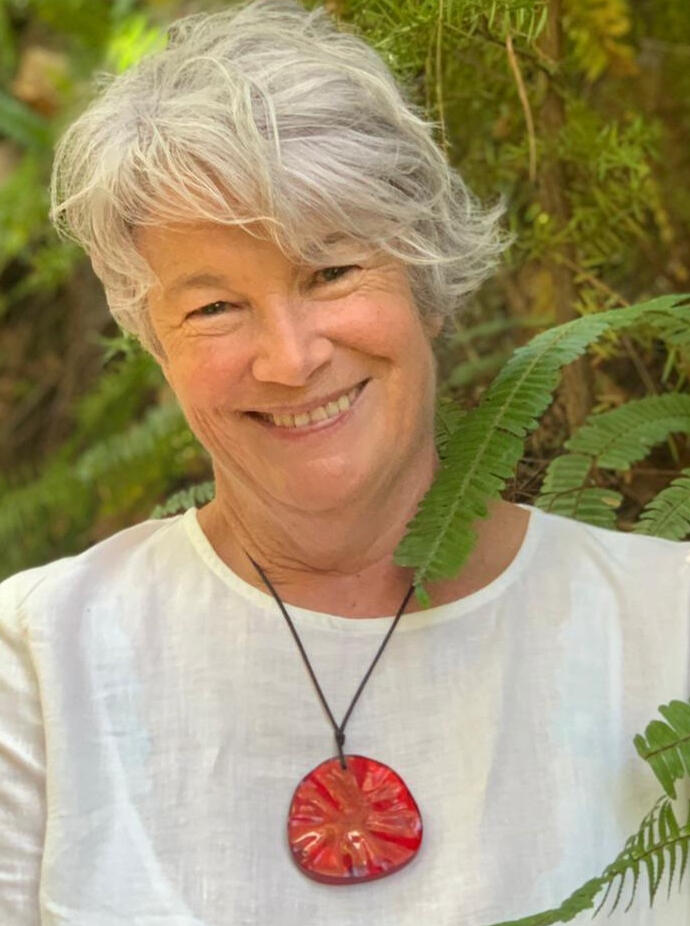
Rachel Benmayor
Psychotherapist
"Online counselling across the Hobart area and throughout Australia,
supporting you through life's changes with grace and balance"
Life Issue Therapy
"Life issue" psychotherapy (sometimes called counselling for life issues or "problems in living") refers to therapy that focuses on the ordinary but difficult challenges of being human, rather than treating a diagnosed mental illness. The idea is that you don't need to have a clinical disorder like major depression or an anxiety disorder to benefit from talking with a therapist.The kinds of concerns it covers include things like relationship difficulties or breakups, grief and loss, career dissatisfaction or big decisions, life transitions (becoming a parent, retirement, moving countries, divorce), stress and burnout, loneliness, questions of meaning and purpose, self-esteem struggles, and family conflict. These are sometimes described as existential or developmental issues — normal parts of life that can still feel overwhelming or stuck.In practice, therapists working with life issues often draw on approaches like person-centred therapy, existential therapy, acceptance and commitment therapy, or general integrative counselling.The work tends to be less about symptom reduction and more about clarifying values, processing emotions, gaining perspective, and finding a way forward.
Trauma Work
Psychotherapy addresses trauma through several complementary pathways, and different approaches emphasize different mechanisms.
Processing the traumatic memory itself. Trauma memories are often stored in fragmented, sensory-laden ways that keep them feeling "present" rather than past. Approaches like trauma-focused CBT, prolonged exposure, and EMDR help people revisit the memory in a safe, controlled way so it can be integrated into a coherent narrative and lose its raw emotional charge. Exposure-based work also reduces avoidance, which is what typically keeps PTSD symptoms going.Changing trauma-related beliefs. Trauma frequently distorts core beliefs — "it was my fault," "the world is entirely dangerous," "I'm permanently damaged." Cognitive processing therapy and similar approaches directly examine and restructure these "stuck points," which often shifts guilt, shame, and hypervigilance.Regulating the nervous system. Trauma can leave the body in chronic states of hyperarousal or numbing. Learing grounding techniques, breathing and relaxation skills, and emotional regulation strategies (a major focus in DBT and in the stabilization phase of most trauma treatments) can be an excellent approach. Somatic approaches like sensorimotor psychotherapy and somatic experiencing work directly with bodily sensations and the physical residue of the trauma response.Providing a corrective relational experience. For interpersonal trauma especially — abuse, neglect, betrayal — the therapy relationship itself is therapeutic. Experiencing consistency, safety, and attunement can gradually revise expectations formed in harmful relationships. This is central in psychodynamic and attachment-based work.Rebuilding meaning and identity. Longer-term work often addresses questions of who the person is after the trauma, restoring a sense of agency, trust, and future orientation — sometimes called post-traumatic growth.Phased treatment for complex trauma. With prolonged or childhood trauma, therapy typically follows stages: first safety and stabilization, then trauma processing, then reconnection with life and relationships.Most effective trauma therapy blends several of these elements rather than relying on just one.
EMDR Therapy
EMDR (Eye Movement Desensitization and Reprocessing) is actually a specialized form of psychotherapy rather than a separate discipline. It fits into general psychotherapy as a targeted, structured method (using an 8-phase protocol and bilateral eye movements) that therapists integrate alongside traditional talk therapy to help the brain reprocess stuck, traumatic memories. EMDR may not be suitable telehealth sessions.
Depression and Anxiety
Psychotherapy addresses depression and anxiety through several evidence-based approaches, each working on different aspects of how these conditions develop and persist.Cognitive Behavioral Therapy (CBT) is the most widely researched approach for both conditions. It works on the premise that thoughts, feelings, and behaviors are interconnected. For depression, this means identifying and challenging distorted thinking patterns — like all-or-nothing thinking, catastrophizing, or overgeneralizing from single negative events — and gradually re-engaging with activities that provide a sense of pleasure or accomplishment (called behavioral activation). For anxiety, CBT often involves examining overestimations of threat and underestimations of one's ability to cope, plus exposure techniques where people gradually face feared situations rather than avoiding them. Avoidance is a key maintaining factor in anxiety: it provides short-term relief but reinforces the fear long-term, so breaking that cycle is central.Other major approaches work through different mechanisms. Interpersonal therapy (IPT) focuses on how relationship problems, role transitions, grief, and social isolation contribute to depression, helping people improve communication and rebuild connections. Psychodynamic therapy explores how past experiences and unconscious patterns shape current emotional difficulties, aiming for insight into recurring themes. Acceptance and commitment therapy (ACT) takes a somewhat different angle: rather than trying to eliminate difficult thoughts and feelings, it teaches people to relate to them differently — observing them without being controlled by them — while committing to actions aligned with personal values. Mindfulness-based approaches similarly train attention and reduce rumination, the repetitive negative thinking loop that fuels both depression and anxiety.Common mechanisms across therapies matter too. The therapeutic relationship itself — feeling understood, having a safe space to process difficult experiences — accounts for a meaningful portion of therapy's effectiveness regardless of the specific technique. Therapy also provides structure, normalizes experiences that feel shameful or isolating, and builds skills like emotion regulation, problem-solving, and self-compassion that people carry forward after treatment ends.In practice, therapists often blend approaches based on the person's needs, and for moderate to severe cases, psychotherapy is frequently combined with medication, which can work better than either alone. Effectiveness varies by individual, and it's common to try more than one approach or therapist before finding a good fit.
About Rachel Benmayor
Rachel's interest in personal therapy happened when she was a teenager and witnessed her parents undertake their own personal therapy journeys. As a young adult she started her career as a health professional and worked for 30 years as a specialist somatic and deep tissue bodyworker. During this time she engaged in her own therapeutic journey taking on 5 years of personal psychotherapy with a Jungian analyst to help support her recovery from trauma during a medical incident whilst giving birth to her second child.
Rachel continued to study areas of interest and in 1995 completed a Masters in Applied Science in Social Ecology at Western Sydney University with her research subject being Death and Dying. In 2013 Rachel completed a Masters in Counselling and Applied Psychotherapy at the Jansen Newman Institute Sydney. After graduation she worked for six years for an organisation in Sydney providing psychotherapy and counselling, working with clients from underprivileged and ethnically diverse backgrounds. In 2018 Rachel relocated to her birth country New Zealand where she has been providing specialist services I the area of trauma and abuse with EMDR therapy being a significant part of her skills base.
Rachel states "there is only one thing I know with clarity, all things change. This is a fundamental law which has shaped every decision I have made in my life. It has become a guiding principal in my work and personal life. Whether I have embraced the coming change or railed against it I know that this natural law will inevitably move me from whatever I am feeling or doing now onto the next moment. My goal in life is to accept with grace whatever is coming and be grateful to whatever has passed. This is not easy.
In my work I strive to support those who are facing any of life’s difficulties with this in mind. There is, in my opinion, no right or wrong way to live our lives if we accept that each choice we make along the way can be done mindfully. There are only opportunities for which we may or may not be ready for.
The psychologist Abraham Maslow writes “In any given moment we have two options: to step forward into growth or step back into safety.”
Sometimes when we get lost or stuck in states that create an imbalance in our physical and emotional wellbeing, we need support to explore and make changes to those parts of our lives. My intention, as a therapist, is to meet clients wherever they are in their own journey."
Rachel is an avid mindfulness practitioner and teacher of mindfulness skills.
Rachel is currently available for telehealth psychotherapy and counselling via "Zoom" or "Meet". Face to face sessions in Hobart CBD will be expected to resume in mid 2027. EMDR may not be suitable telehealth sessions. Contact Rachel to discuss possible options.
Contact
hobartpsychotherapy
@gmail.com
Phone Contact: (Currently New Zealand Based)
Office PA: +64 225213276